Furniture Buying Guide
How to Choose a Bench or Ottoman for Everyday Use
A bench or ottoman can be the quiet multitasker that makes a room feel more considered: somewhere to sit while tying shoes, a soft landing for tired feet, or a discreet place to tuck away daily clutter. The right choice balances proportion, comfort, construction, and care with the way you actually live.
Begin with the job, not the silhouette
Benches and ottomans share a talent for making a room more useful, but they are not interchangeable in every setting. A bench typically has a longer, more linear profile and may be upholstered, wooden, or a combination of materials. An ottoman is often more compact, with a cushioned top that invites feet up; some versions also work as extra seating or provide concealed storage. The best one is not necessarily the most decorative or the most versatile on paper. It is the one whose main purpose is clear—and whose other functions are genuinely helpful.
Before browsing, describe the task in a sentence. “I need somewhere to sit to put on shoes” points toward a stable entryway bench at a convenient height. “I want to rest my feet beside the sofa” suggests a generously padded ottoman that is easy to reach. “I need to hide spare blankets” makes storage a priority, but only if the lid is simple to open and the interior suits what you intend to keep there.
This small exercise guards against a familiar decorating misstep: choosing a piece for an imagined version of daily life. A storage bench may look like an elegant answer to every stray object, yet become inconvenient if its lid is heavy or the seat is constantly covered with bags. A plush ottoman may seem inviting, but prove less useful if it occupies the only clear walkway. Let routine lead; style can refine the decision once the practical brief is settled.
Bench or ottoman: understand the difference
A bench tends to offer a defined seat, a long top, and a more architectural presence. Its length can make it useful for two people, for a bedroom dressing area, or beneath a window where a single chair might feel disconnected. Some benches are designed primarily as seating, while others include a lower shelf or enclosed storage. An upholstered bench softens a room; a wood or metal frame can lend it a more structured character.
An ottoman is usually more adaptable in the moment. It can serve as a footrest, a casual perch, or, when appropriately constructed, a surface for a tray. Smaller ottomans can be moved around as needs change, while larger upholstered forms may anchor a seating arrangement. A storage ottoman combines a cushioned lid with an interior compartment, but the added mechanism and weight make build quality particularly important.
There is no universal rule that one is better. Think about how people move through the room, whether the piece should remain in one location, and how formal the seating needs to feel. A bench can be a natural fit for a hallway or the foot of a bed; an ottoman may feel more at ease beside a sofa or lounge chair. Either can work elsewhere if its proportions and construction suit the setting.
Measure for flow as well as fit
Measure the floor area where the piece will stand, then consider the space around it. A bench can technically fit along a wall and still make a narrow entry feel difficult to navigate. An ottoman may sit neatly in front of a chair when the room is empty, then become an obstacle once someone is seated and needs to pass. Marking the proposed footprint with painter’s tape or paper can make the scale easier to judge before a purchase.
Pay attention to length, width, and depth—not just the headline dimensions. A long bench can overwhelm a small wall even if it is shallow. A deep ottoman may crowd a coffee table or reduce the comfortable space between seats. In a bedroom, check that the piece leaves enough room to open drawers, walk around the bed, and reach closet doors. In an entryway, allow for bags, coats, and the natural pause people make when coming in or going out.
Seat height deserves equal care. Compare the bench or ottoman with the nearby furniture and with the people who will use it. A seat that is very low can be awkward for putting on shoes; one that is too high may feel perched beside a lower sofa or chair. For a footrest, the top should feel comfortable in relation to the seated position rather than forcing the legs upward. If possible, test the height in person, or compare listed measurements with a piece you already find comfortable.
Also check the height of a storage ottoman when its lid is open. It may need more clearance than the closed footprint suggests, especially if it sits beneath a window, shelf, or wall-mounted feature. A bench with a lift-up top needs room for the lid to move freely and for the user to access the compartment without shifting the entire piece.
Choose construction that can handle real use
Daily-use furniture is judged less by a first impression than by how it performs after repeated sitting, shifting, opening, and cleaning. Examine the frame and the way its parts meet. A well-made bench should feel steady when weight is placed near the middle and toward the ends. It should not rock, twist, or creak under ordinary use. If the design has legs, look for secure joints and a stance that feels balanced on the floor. On an ottoman, consider whether the base stays planted when someone rests their feet or uses it as a seat.
The frame material influences both character and performance. Solid wood, engineered wood, and metal can all be appropriate, depending on the design and intended load. What matters is sound construction and a clear understanding of how the piece is meant to be used. Ask about weight guidance where available, especially if the bench will be used by more than one person or the ottoman is expected to function as regular seating. Do not assume that a decorative footrest is built to support the same use as a dedicated seat.
For storage designs, inspect the hinge, lid support, and opening action. A lid should move in a controlled way rather than dropping abruptly or requiring awkward effort. Check whether the mechanism keeps the lid safely open, whether fingers could be pinched, and whether the storage cavity is easy to reach. A smooth interior and a practical opening can matter more to everyday satisfaction than a generous capacity that is difficult to use.
Look beneath the piece, too. Floor glides or protective feet can help reduce scratching and make movement easier, but they should suit the flooring. On a rug, a very light ottoman may shift more than expected; on a hard surface, a heavy bench may benefit from appropriate protection. For a piece that will be moved frequently, manageable weight and a shape that is easy to grip are useful details—not afterthoughts.
Upholstery: beauty with a practical side
Upholstery determines much of a bench or ottoman’s mood. A textured fabric can make a bedroom feel softer; a smooth, closely woven covering may read as crisp and tailored. Color and pattern also affect how a piece sits within a room. A restrained neutral can make a small ottoman blend into its surroundings, while a richer tone or graphic fabric can give a simple silhouette more presence. The most successful choice complements nearby textiles without requiring an exact match.
For an entryway, consider the realities of outdoor clothing, shoes, and frequent contact. A durable, easy-to-clean covering is often preferable to a delicate fabric that requires constant vigilance. In a bedroom, where use may be gentler, softness and visual harmony may take a larger role. A family room or other busy space calls for a candid assessment of spills, pets, sunlight, and how often the upholstery is likely to be touched.
Fabric labels and care instructions are more useful than assumptions based on appearance. Ask whether the covering can be spot-cleaned, professionally cleaned, or removed for washing, and follow the manufacturer’s recommendations. Performance claims can vary, so look for specific care guidance rather than relying on broad descriptions alone. If the fabric has a nap, pile, or visible weave, consider how it may show brushing, pressure marks, or everyday wear.
Leather and other smooth coverings have their own maintenance needs, as do natural and textured fabrics. No material is entirely carefree. The aim is to choose a finish whose care expectations feel realistic for your household. A beautiful bench that demands a level of attention you cannot give may not be the most elegant choice in practice.
Comfort depends on more than softness
A cushioned top should support the way it will be used. For a short pause in an entryway, a firm, stable seat may be more useful than a deeply padded one. For an ottoman meant to support the feet, a softer top can feel welcoming, but excessive softness may make it less stable as occasional seating. Pay attention to the padding’s shape and recovery: it should suit the purpose without feeling uneven or collapsing under ordinary pressure.
Consider the edge as well. A well-defined, supportive edge can make a bench feel easier to sit on, while a rounded or generously padded profile may soften the overall look. If more than one person will use the bench, its usable seating area matters. A decorative trim, thick arms, or a pronounced back can reduce the practical surface compared with the overall length.
For an upholstered ottoman used as a footrest, think about how its height relates to the chair or sofa. The goal is an easy, relaxed position, not a perch that raises the feet uncomfortably. If it will sometimes act as a spare seat, check that the structure and upholstery are suitable for that purpose. A piece can serve more than one role, but its everyday comfort should not be compromised by trying to make it do everything.
Decide whether storage earns its place
Storage can be valuable when it solves a specific, recurring problem. A bench near the entrance might hold accessories that are used on the way out; a bedroom storage bench could keep spare linens or seasonal items nearby. An ottoman can conceal a throw or a few living-room essentials while preserving a calm, uncluttered appearance. The compartment is most useful when its contents are easy to retrieve and return.
Before choosing a storage bench or ottoman, measure the items you plan to store. Interior capacity can be smaller than the exterior suggests because of the frame, lining, and lid construction. Check the compartment’s depth, width, and opening, then consider how often you will need to access it. A deep cavity may suit bulky items but make small objects disappear at the bottom. Dividers or baskets can help organize contents if the design accommodates them safely.
Think about weight and lifting, too. A storage top that feels cumbersome in a showroom may become an everyday annoyance at home. If the compartment will be opened often, a supported lid and comfortable grip are important. Avoid treating the interior as a substitute for a purpose-built storage unit if it is likely to be overloaded or used to hold items that should remain easily accessible.
Storage is not automatically an upgrade. If you do not need the compartment, a simpler bench or ottoman may be lighter, easier to move, and less complicated to maintain. Choose concealed storage because it improves your routine—not simply because the feature is available.
Place the piece with intention
In an entryway, a bench should support the arrival-and-departure ritual without narrowing the route through the space. Consider pairing it with a nearby place to hang coats or set down small essentials, but avoid allowing the seat to become a permanent landing zone for everything. A firm top and easy-care upholstery are often practical here. If shoes will be changed while seated, check the bench’s stability and height before settling on its style.
At the foot of a bed, a bench can create a visual finish and provide a convenient place to sit or arrange clothing. Its length should feel proportionate to the bed rather than extending so far that it dominates the room. Leave enough clearance to move around it comfortably. If the bedroom is compact, a narrower design or a small ottoman may deliver the function without making the layout feel crowded.
In a living space, an ottoman can soften the geometry of chairs and sofas. A tray may provide a temporary surface for objects, but it should be stable and suited to the ottoman’s dimensions. Consider how the piece will behave when people are seated: can it be reached easily, and can it be moved aside without effort? In a reading corner, a small upholstered ottoman may offer a comfortable place to rest the feet while keeping the composition relaxed.
These uses are starting points, not strict rules. A bench can be an unexpected accent in a living room, and an ottoman can work in a bedroom or hallway. The test is whether it improves movement, comfort, or organization in that particular space.
Make color and scale feel considered
A bench or ottoman can either recede into the room or become a deliberate focal point. If the space already contains strong patterns, layered finishes, or statement furniture, a simple form in a complementary color may bring balance. In a quieter room, a distinctive fabric or sculptural base can introduce character without requiring a larger redesign.
Scale is the quiet determinant of polish. A small ottoman can look intentional beside a compact chair but adrift next to a large sectional. A long bench may bring order to a broad wall but feel oversized in a narrow passage. Compare the piece’s height and visual weight with nearby furniture, not just its floor dimensions. Dark, solid forms can appear more substantial than pale or open-legged designs of similar size.
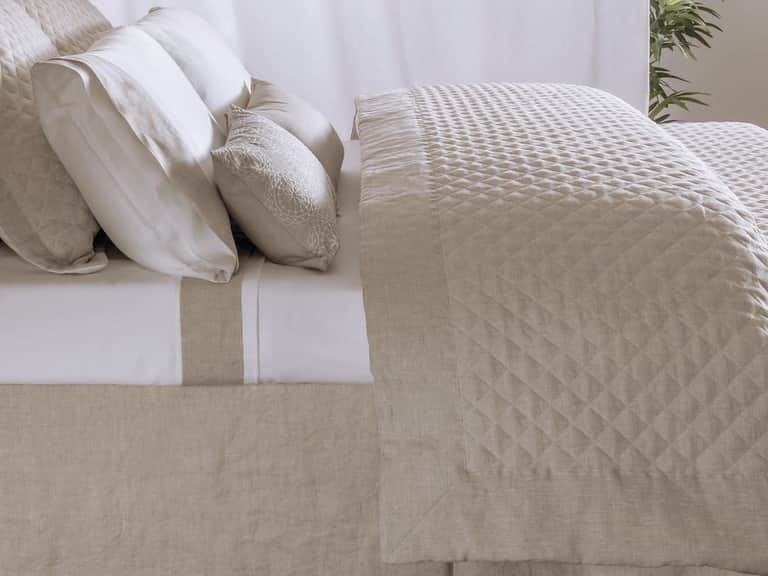
Texture offers another way to create cohesion. Upholstery can echo the softness of curtains or bedding, while a wood or metal base can relate to other finishes in the room. Coordination need not mean matching every color or material. A thoughtful contrast often feels more personal than a perfectly synchronized set.
A quick checklist before you buy
- Purpose: Identify the primary job—seating, footrest, storage, or a combination.
- Measurements: Check the footprint, seat height, depth, and clearance around doors, drawers, and walkways.
- Construction: Assess stability, joints, base, hinges, and any lid-support mechanism.
- Use: Confirm that the piece is designed for the way you plan to sit, rest your feet, or store belongings.
- Upholstery: Review the fabric or covering and its specific cleaning instructions.
- Storage: Measure the objects to be stored and consider how easily the compartment opens.
- Placement: Make sure the piece supports movement through the room rather than interrupting it.
- Care: Choose a maintenance routine you can comfortably keep up with.
If shopping in person, sit on the bench, test the ottoman’s stability, and operate any storage lid. If buying online, read the full dimensions and construction details rather than relying on a styled photograph. Check the delivery route as well: stairways, hallways, and door openings can determine whether a large piece will reach its intended room.
Keep everyday furniture looking its best
Care begins with the maker’s instructions. Dust or vacuum upholstery using an appropriate attachment, and address spills promptly using the recommended method. Avoid aggressive scrubbing or unapproved cleaners, which can alter color or texture. Rotate or reposition a frequently used ottoman occasionally if its design allows, so pressure is not concentrated in one spot. Check feet, fasteners, and moving parts periodically, tightening or servicing them as directed.
For storage models, keep the compartment suited to its intended use and avoid placing excessive weight on the lid. Do not force a hinge or mechanism that feels obstructed. A little attention helps preserve both appearance and function, particularly when the piece is used every day.
Ultimately, the most successful bench or ottoman is an exercise in considered usefulness. It fits the room without crowding it, feels comfortable for its intended role, and has materials and construction suited to real routines. Whether the priority is bedroom seating, a hardworking entryway perch, a softly upholstered footrest, or a storage bench that keeps essentials close, choose with the daily experience in mind. When proportion, durability, and care align, a modest piece of furniture can make a room feel distinctly more complete.